A patient walks into a clinic asking how to prevent wrinkles. Another wants firmer skin without looking noticeably different. A third has seen an advertisement promising cellular rejuvenation.
These concerns reflect a wider conversation in aesthetic medicine: how can we help skin stay healthy for longer?
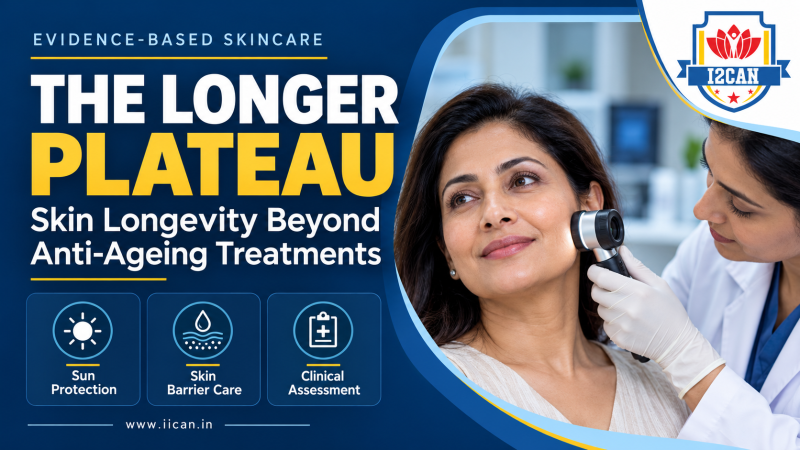
I2CAN’s report, The Longer Plateau, examines this question through skin biology, treatment evidence and clinical practice in India. Its central message is practical: lasting skin health depends on prevention, appropriate treatment and consistent review.
What Is Skin Longevity?
Skin longevity means maintaining skin function and appearance over time. It includes supporting the protective barrier, limiting preventable damage and addressing changes such as dryness, uneven pigmentation and reduced elasticity.
A related term, skinspan, describes the period during which skin remains healthy in function and appearance. It appears in published dermatology research as a framework for discussing long-term skin care.
The “longer plateau” offers a useful image: skin remaining in good condition for longer, with a gradual decline rather than repeated cycles of damage and correction.
Why Does Skin Age Differently From Person to Person?
Ageing involves natural biological changes alongside accumulated environmental exposure.
The report describes how changes in collagen, cellular activity and inflammatory signalling affect skin structure and repair. Sunlight, smoking and other exposures add to these processes.
This helps explain why two people of the same age may have different skin concerns. It also explains why anti-ageing treatments should follow an individual assessment rather than an age-based package.
Anti-Ageing Skincare Starts With Everyday Protection
New procedures attract attention, but daily habits remain central to preventing premature skin ageing.
Sun Protection
The American Academy of Dermatology recommends broad-spectrum, water-resistant sunscreen with SPF 30 or higher, alongside shade and protective clothing. Sun protection helps reduce premature wrinkles and age spots caused by ultraviolet exposure.
A clinic consultation should therefore ask about actual sunscreen use, outdoor exposure and practical barriers to maintaining protection.
Retinoids and Skin Barrier Care
Retinoids can help address fine lines, pigmentation and texture, but product choice and tolerance matter. They can cause irritation, so introducing them carefully and maintaining sun protection are important.
Moisturising and avoiding unnecessarily harsh routines also belong in a sustainable skincare plan. Adding more active ingredients does not automatically produce better results.
Where Do Skin Rejuvenation Procedures Fit?
The I2CAN report separates treatments by the strength of their supporting evidence. This is useful because “regenerative aesthetics” covers several approaches with different levels of clinical maturity.
Collagen Stimulation and Device Treatments
Biostimulatory injectables, including poly-L-lactic acid and calcium hydroxylapatite, are discussed for selected aesthetic indications. The report also examines lasers, radiofrequency microneedling and focused ultrasound.
These options require appropriate patient selection, training and attention to product or device indications. Evidence for improving a particular concern should not be presented as proof that a treatment reverses biological ageing.
Emerging Regenerative Treatments
Polynucleotides, PDRN and PRP are attracting interest in skin rejuvenation. However, the report identifies limitations such as small studies, inconsistent protocols and differences between products.
Patients should understand what is established, what remains uncertain and what outcomes can reasonably be expected.
Exosome treatments require particular scrutiny. The US FDA states that there are no FDA-approved exosome products and has warned about unapproved regenerative therapies. This US position does not establish a product’s Indian regulatory status, which requires separate verification.
Why Indian Skin Needs Individual Treatment Planning
India includes a wide range of skin tones and sensitivities. The report highlights post-inflammatory hyperpigmentation as an important consideration when treating darker skin types.
Treatment planning should account for pigmentation history, melasma, previous reactions and recovery requirements. Device settings and peel protocols should be selected for the individual patient rather than copied directly from another population.
Protecting skin quality includes avoiding unnecessary inflammation and recognising when treatment should be postponed.
How Should Clinics Measure Progress?
A convincing skin longevity plan needs consistent records.
The report recommends standardised photographs, clinical examination and suitable measurements where available. Using the same lighting, angles and camera conditions makes comparisons more useful.
Reviews should assess tolerability, patient concerns and whether the plan needs adjustment. Claims that a treatment has made skin “ten years younger” demand stronger evidence than an image-based score.
For doctors and aspiring aesthetic practitioners, skin longevity offers a clear direction: understand the biology, assess the evidence and build care around the patient. The most useful plan is one the patient understands, can maintain and can review through documented changes.