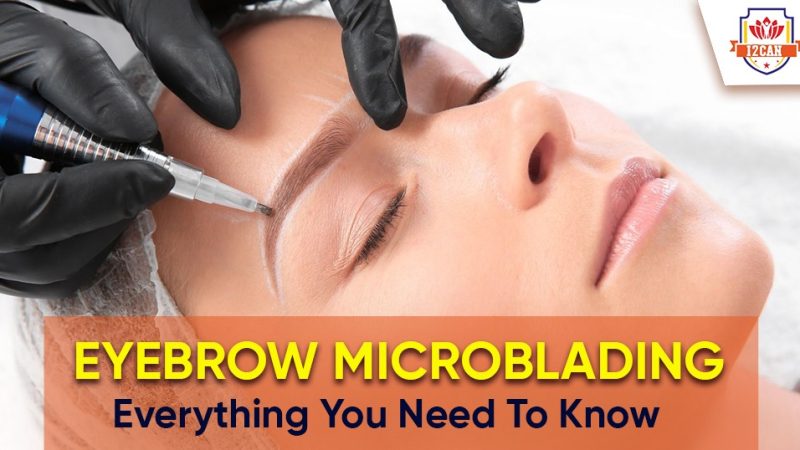
In the field of permanent makeup, Microblading, also known as Eyebrow Embroidery, is considered less invasive than traditional skin tattooing and considered semi-permanent. According to studies, microblading usually lasts between one and three years, depending on skin type and skincare regime. Each grafted hair is gently etched into the skin with an ultra-fine needle and a hand tool, giving the result an incredibly natural and realistic appearance.
Those with little or no eyebrows, thinning eyebrows due to age or over-tweezing their eyebrows will find microblading appropriate for improving or fully reconstructing lost eyebrows and enhancing their brows. We choose the pigments based on the brow colour matching the skin tone and the natural brow colour.
How long does it take?
Microblading typically takes approximately 2.5 to 3 hours for the first session. At this appointment, the technician shapes and styles the client’s eyebrows for client approval. Afterwards, pigment colour selection is conducted. After the client approves the selections, we begin the procedure. In order to make any minor adjustments that may be necessary, the client needs to come in for a follow-up appointment. It takes about 4-6 weeks after the initial Microblading session to have a second session. Typically, this second session lasts between 1.5 and 2 hours.
How long does it take to heal?
There will be a slight redness to the eyebrow area, and the eyebrow colour will be very dark after the procedure. This is normal and a natural thing to happen following the procedure. It will fade by up to 40% after the healing process is completed. You will notice that the eyebrows are turning darker in the coming days and that there is slight scabbing. Avoid picking at the scabs since doing so will damage the skin and the microblade area.
It is usual for the eyebrows to lighten up after their healing process. You are not required to take any downtime after the procedure. About 7-14 days are needed for the eyebrows to heal and 1 month for the colour to settle in fully. Following surgery, you will notice that the skin’s colour is very light; it will have an opaque milky appearance. This condition is commonly experienced when you have tattoos. The skin is healing from the outside, but the inner tissue is recovering from the inside out. As the skin heals, the actual colour will appear.
Is the touch-up session necessary?
Sure! Each person heals differently, and the result may differ, so touching up after 4-6 weeks is necessary. The first session may not be successful in some areas and needs to be repeated. It may be required to adjust the pigment colours, the thickness of the brows, and add more strokes. In addition, people with oily skin will often need a darker shade when they touch up since the oils tend to lighten the pigment. A touch-up session is the most critical step towards making sure your brows look perfect and retain their natural colour!
Is it painful?
A mild to no level of pain is expected with the procedure. A topical anaesthetic will be applied to the area before the process and reapplied during it. Each person responds differently to anaesthetic; depending on the individual, light cat scratches to feeling nothing has been described