
When we think of nutrition, we often focus on macronutrients like carbohydrates, proteins, and fats. But there’s another crucial category of nutrients that plays an equally important—if not more vital—role in our health: micronutrients. Though required in small amounts, vitamins and minerals are essential for nearly every function in the human body.

What Are Micronutrients?
Micronutrients are nutrients that our bodies need in trace amounts to function properly. These include vitamins (such as A, B-complex, C, D, E, and K) and minerals (like calcium, iron, zinc, iodine, selenium, and magnesium). Unlike macronutrients, micronutrients don’t provide energy, but they are key to everything from immunity and bone strength to energy production and mental well-being.
Why Are Micronutrients Important?
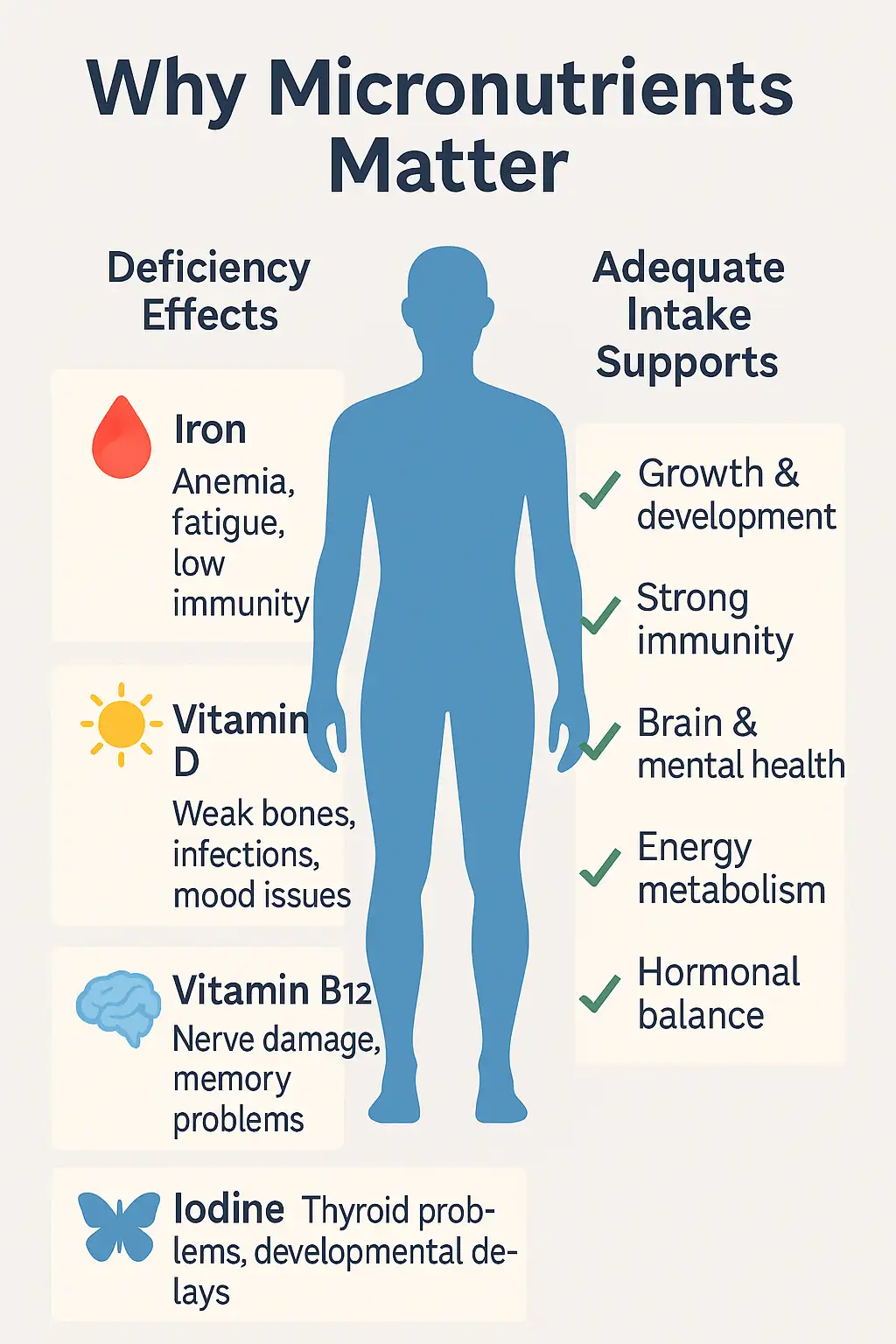
Even a slight deficiency in certain micronutrients can lead to serious health issues. For example:
• Iron deficiency is the most common cause of anemia, leading to fatigue, poor concentration, and lowered immunity.
• Vitamin D deficiency is linked to weak bones, frequent infections, and mood disorders.
• Iodine deficiency can cause thyroid issues and developmental delays, especially in children.
• B12 deficiency is common in vegetarians and vegans and can lead to nerve damage and memory issues.
On the other hand, getting enough of the right micronutrients supports:
• Healthy growth and development in children
• Stronger immunity against infections
• Better brain and mental health
• Efficient metabolism and energy production
• Fertility and hormonal balance
Where Do We Get Micronutrients?
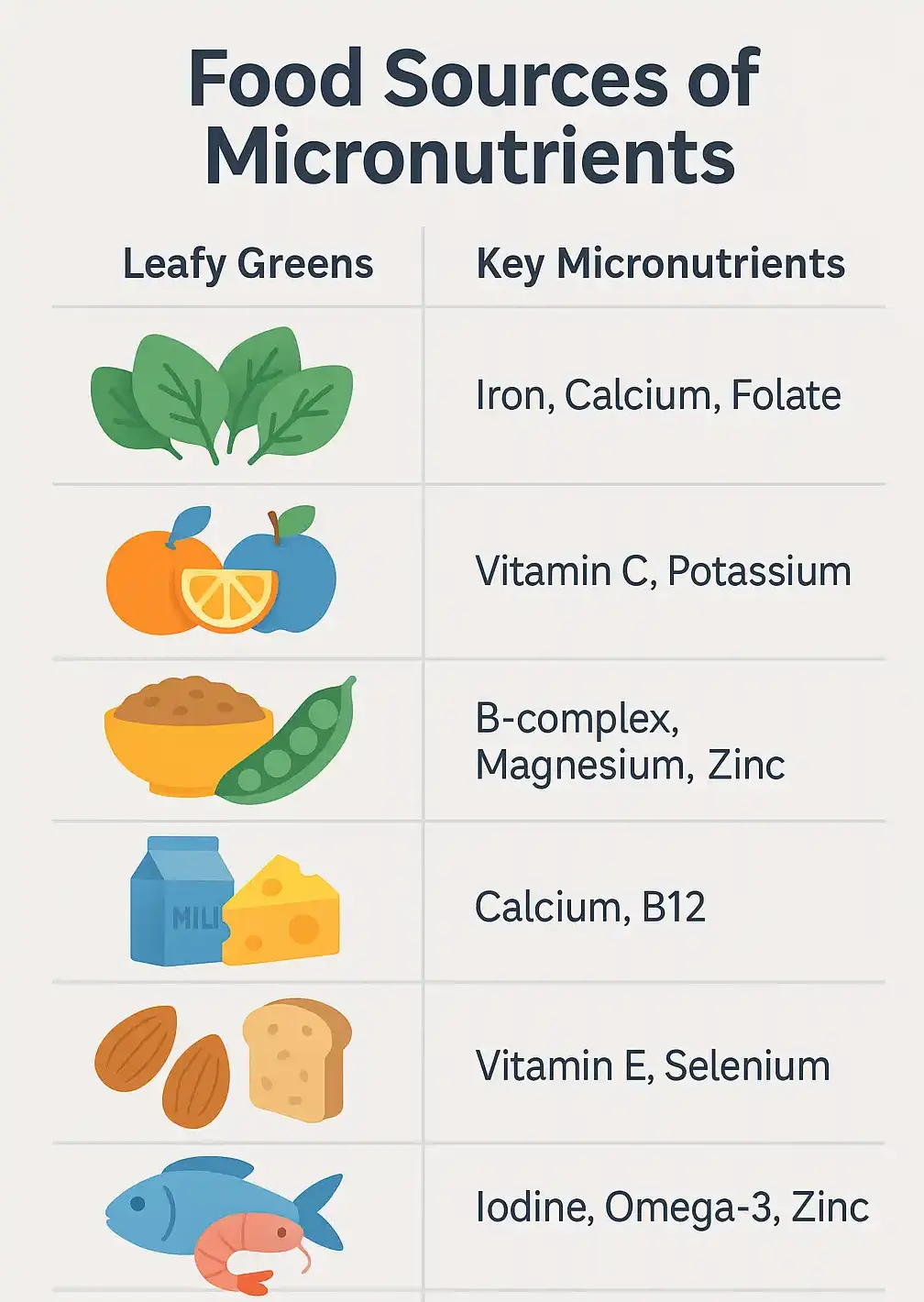
The best way to get micronutrients is through a balanced and varied diet. Some excellent sources include:
• Green leafy vegetables (iron, calcium, folate)
• Fruits and citrus (vitamin C, potassium)
• Whole grains and legumes (B-complex vitamins, magnesium, zinc)
• Dairy products (calcium, vitamin B12)
• Nuts and seeds (vitamin E, selenium)
• Seafood (iodine, omega-3, zinc)
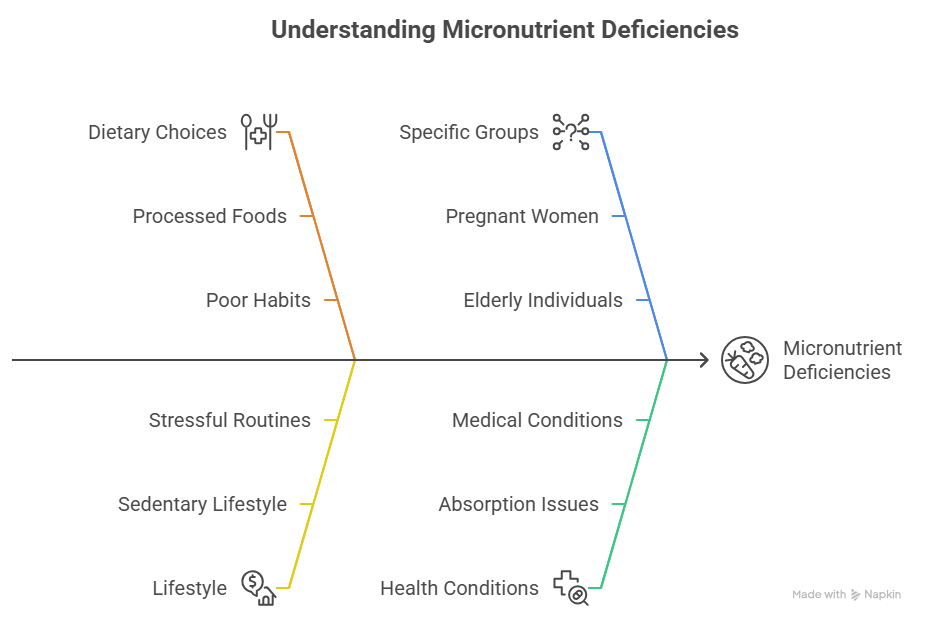
However, certain groups—like pregnant women, elderly individuals, people with dietary restrictions, or those with health conditions—may require supplementation under medical guidance.
Note:
Micronutrients may be small in quantity, but they are mighty in function. Poor dietary choices, processed foods, and modern lifestyle habits are increasing the risk of hidden hunger—nutrient deficiencies that go unnoticed but silently affect health. Awareness and prevention are key.
A well-balanced diet rich in colorful fruits, vegetables, whole grains, nuts, seeds, and healthy fats can provide most of the essential micronutrients our bodies need. After all, in nutrition—as in life—it’s often the little things that make the biggest difference.