A patient notices a widening parting. Another sees more hair on the pillow after an illness. A young professional worries about a receding hairline.
All three may visit a hair clinic, but they need different assessments—and potentially very different treatment plans.
I2CAN’s October 2026 hair market report highlights the growing importance of non-surgical care within aesthetic practice. For doctors and aspiring practitioners, this creates a reason to understand clinical trichology: the study and management of hair and scalp concerns.
Why Hair Care Extends Beyond Transplantation
Hair restoration is often associated with surgery. Yet consultations also involve temporary shedding, early pattern hair loss, scalp disease and cosmetic concerns about density.
These patients may need medical treatment, monitoring or help managing an underlying condition. Some will be suitable for transplantation; others will benefit from a different approach.
For clinics, the practical lesson is straightforward: a useful hair service begins with the ability to assess a concern, explain it clearly and recommend appropriate care.
Different Causes Can Look Surprisingly Similar
Hair fall is a symptom rather than a complete diagnosis.
Hereditary hair loss can cause progressive thinning. Childbirth, illness or significant stress can trigger increased shedding. Thyroid problems, nutritional deficiencies and damaging hair practices may also contribute. These causes cannot reliably be distinguished through a photograph or a description of “heavy hair fall” alone.
This matters because a treatment suited to one condition may offer little benefit for another. A patient with temporary shedding should not automatically receive the same procedure package as someone with progressive pattern hair loss.
What a Useful Hair Consultation Should Include
A consultation should help the patient understand what is happening and what comes next.
Relevant questions include:
- When did the shedding or thinning begin?
- Is it sudden, gradual or patchy?
- Has there been a recent illness, childbirth or medication change?
- Are itching, discomfort or scaling present?
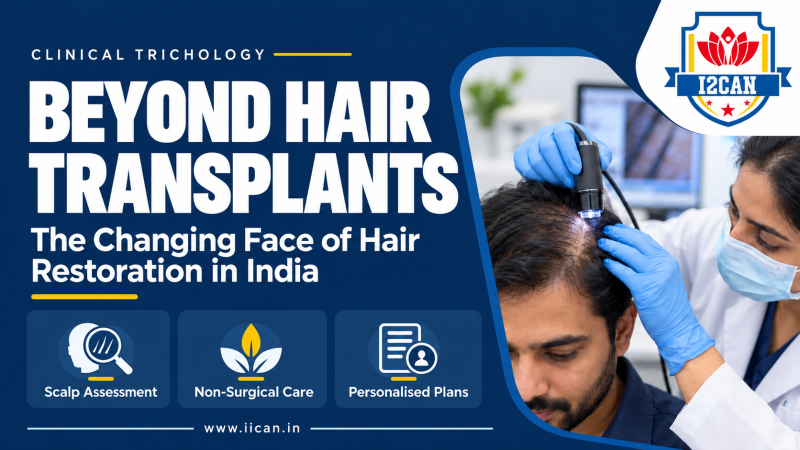
Scalp examination comes next. Magnified assessment, including trichoscopy where appropriate, can support evaluation. Blood tests or a scalp biopsy may be needed when the suspected cause warrants further investigation; every patient does not require every test.
Standardised photographs also give the practitioner and patient a consistent reference for follow-up discussions.
Understanding Non-Surgical Hair Restoration Options
Medical Treatment and PRP
Depending on the diagnosis, treatment may include topical minoxidil or prescription medicines. Suitability, possible adverse effects and the need for continued treatment should be discussed individually.
Platelet-rich plasma, or PRP, uses a preparation derived from the patient’s blood and may help selected patients. It commonly involves repeat sessions, and results vary. Supplements are most useful when an assessment identifies a relevant deficiency.
Emerging Regenerative Treatments
The I2CAN report discusses growth factor concentrates, peptides and exosomes as areas of commercial interest. However, inclusion in a market report does not establish that different products have equivalent evidence or safety profiles.
Practitioners should examine product-specific research, manufacturing quality and applicable Indian regulatory requirements. The US FDA has also warned about misleading claims and safety concerns surrounding unapproved regenerative products, including exosomes. US guidance should not be mistaken for an Indian approval decision.
Scalp Health and Cosmetic Coverage Have Different Goals
The report also highlights scalp care and camouflage within the wider hair-services market.
These services need clear explanations. A scalp-care service should state the concern it addresses. Scalp micropigmentation creates the appearance of coverage; it does not create new follicles.
Distinguishing comfort, appearance and hair-growth goals helps patients understand what they are purchasing and how success will be assessed.
What This Means for Aesthetic Practitioners
Building a hair service requires more than adding procedures to a menu. It requires consultation skills, appropriate training, consent, documentation and clear referral pathways.
For learners, training should explain diagnosis, patient selection, treatment limitations and complication management alongside technique.
The opportunity is to become a reliable source of guidance for people who are often anxious and overwhelmed by competing claims. A well-explained assessment, realistic plan and consistent follow-up give patients something valuable: a clearer understanding of their condition and their choices.